



When we think of Intellectual Property, the default is to think of patents and inventions. Not enough emphasis has been given to empowering artist, filmmakers/photographers, authors and other creatives with the knowledge and importance of understanding their IP rights and how to leverage their assets for business. Bringing this bootcamp to Yukon is something I’ve been genuinely excited about. I’ve long advocated for making the kinds of resources typically reserved for tech startups more accessible to the tech-curious.
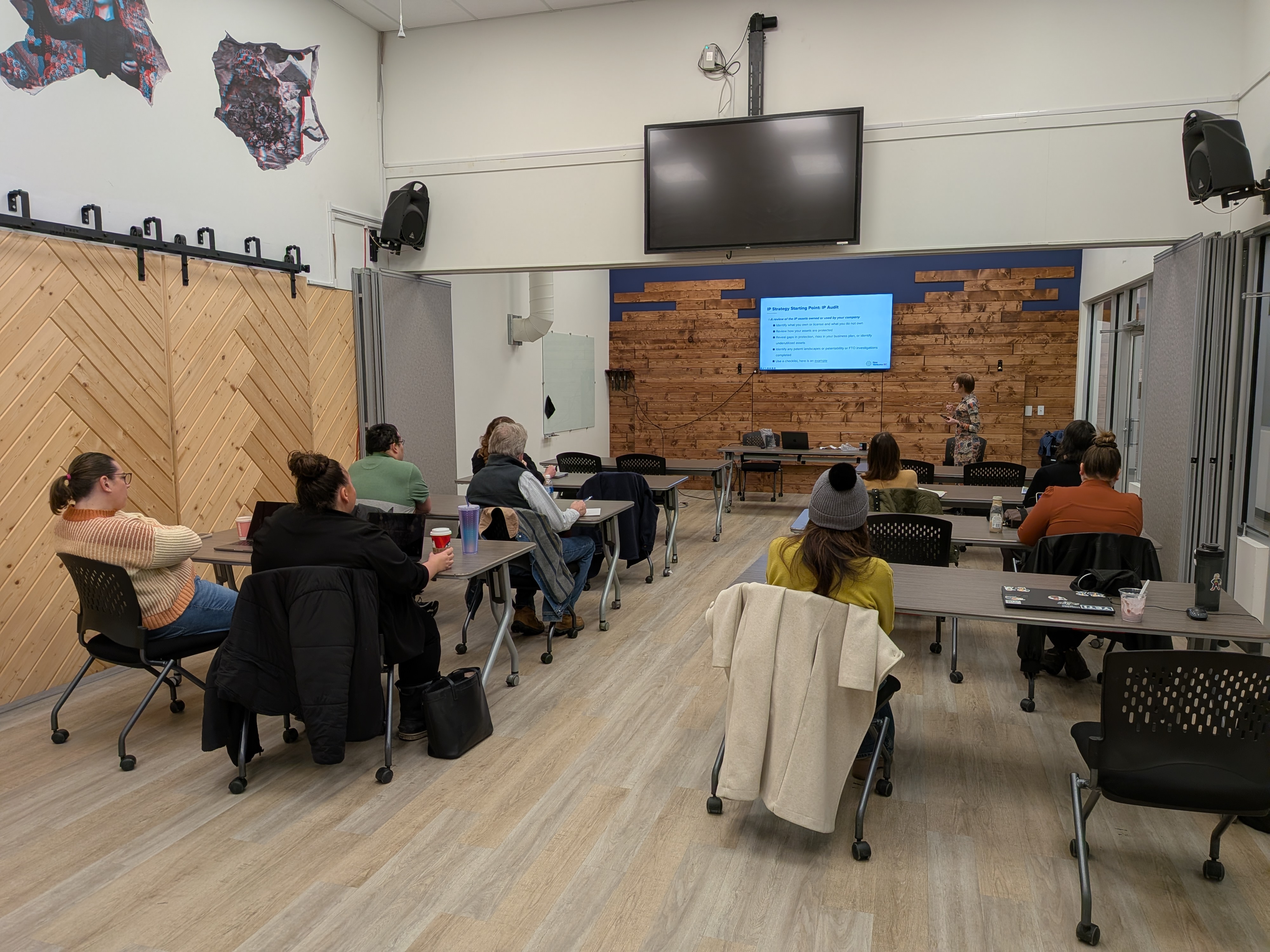
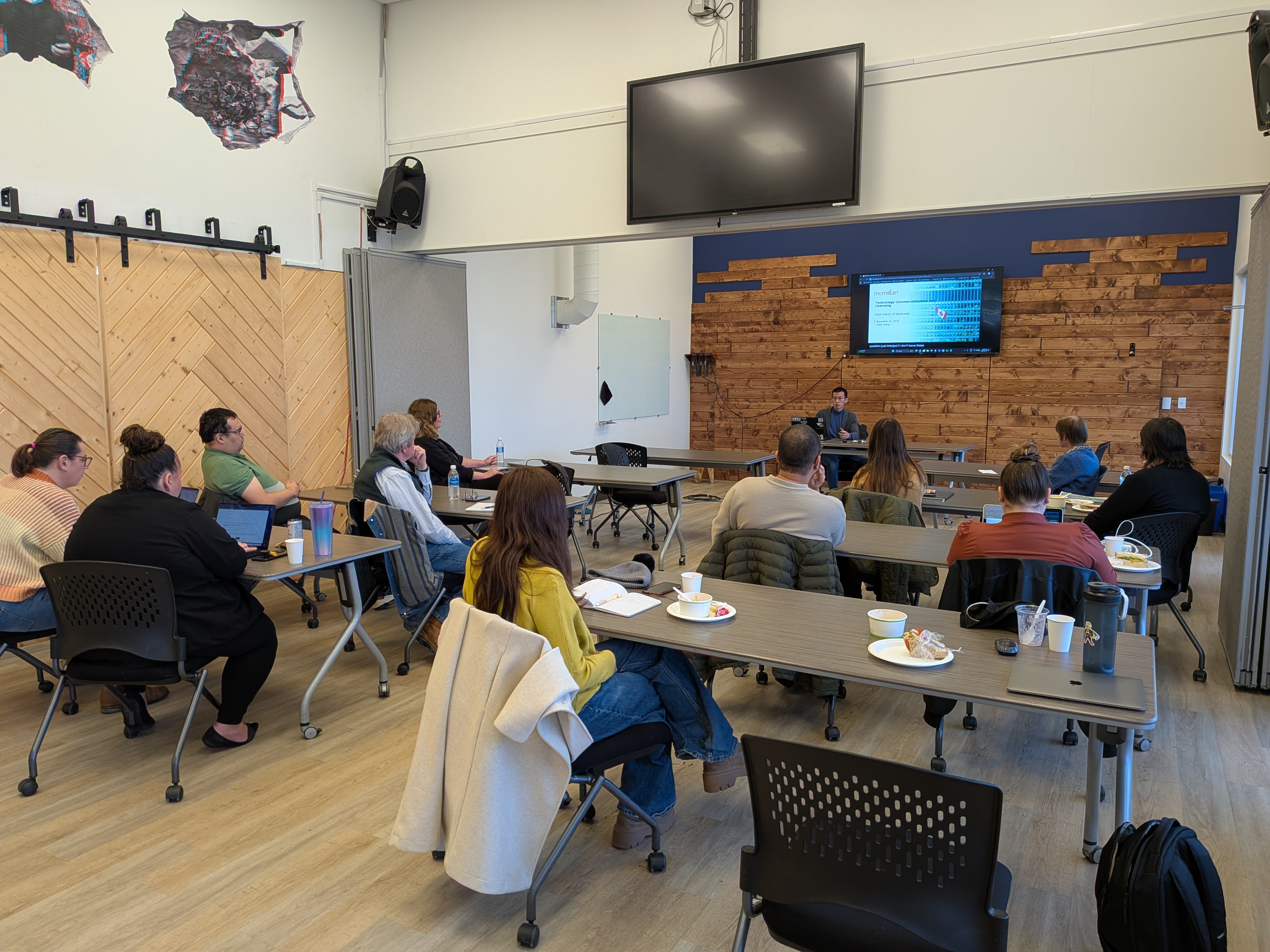
On November 21st, we hosted Susan Tees, Intellectual Property Director @ New Ventures BC and Pablo Tseng, Partner @ McMillan LLP for an in-depth session on IP topics specific to content creators and artists. It was a highly engaging session where the speakers were constantly inundated with questions, there definitely appears to be a strong demand for this topic amongst artists & creators.
Glossing over the basics which I’m already familiar with, here are some nuanced key lessons that were good reminders/new to me too:
- You can not Trademark something that’s functional, that’s what patents are for. The very nature of patents is that you should allow people to use it after your patent expires.
- Ownership of IP (all forms)
- By default, belongs to the creator/inventor.
- Can be assigned to a corporation.
- For partnerships, if developed together for the business, it is jointly owned by default. If you have an incorporated partnership, it can be assigned to the corporation.
- IP Assignment
- In US, you can assign future rights for something that doesn’t exist yet.
- However, in Canada, you can only assign what exists. IP that hasn’t been created yet, can’t be assigned at the time of assignment. But the promise to assign, can be made more tangible under contractual law – i.e. you can word an agreement to define when the assignment has been deemed to occur – e.g. upon receiving payment, the IP has effectively been assigned.
- Q&A: If you are contracted by Company A to build something, but Company A was acquired by Company B – that assignment of IP potential (not created yet), are you still obligated to fulfill? e.g. what if you really liked working with Company A because of their ethical approach, and Company B was an “unethical” company like Amazon and you really don’t want to work with them.
- It boils down to what the argument between the creator and Company A stipulated. It’s not just about IP (though IP is the core subject matter of the contract) but also about general expectations in any contractual arrangement.
- Design patents (a.k.a. Industrial Design in Canada)
- Prior art applies too, you may not register a design that is already in the public domain.
- 3D art – Besides protecting your creations through Copyright, you could also register an Industrial Design to protect the aesthetic and visual aspects of your creation.
- Licensing
- In commercial and intellectual-property settings, licenses are generally contractual in nature. Terms are determined by the licence agreement, subject only to any statutory requirements or limited common-law principles that may apply.
- You can set up constraints around sublicensing – e.g. licensee may sublicense once, and the entity you sublicense to may not sublicense further. Or a licensee may only sublicense within their corporate group e.g. parent and subsidiary companies.
- Recent regulatory changes in some jurisdictions provide that, under certain conditions, licensees may continue to use intellectual property even if the licensor becomes bankrupt. These protections typically apply when the licence is properly structured and the licensee continues to meet its obligations, such as paying royalties. This enhances stability and reduces operational risk for licensees, though it may not cover all types of IP or ancillary rights.